Preparing for Preschool: Circle Time at Home
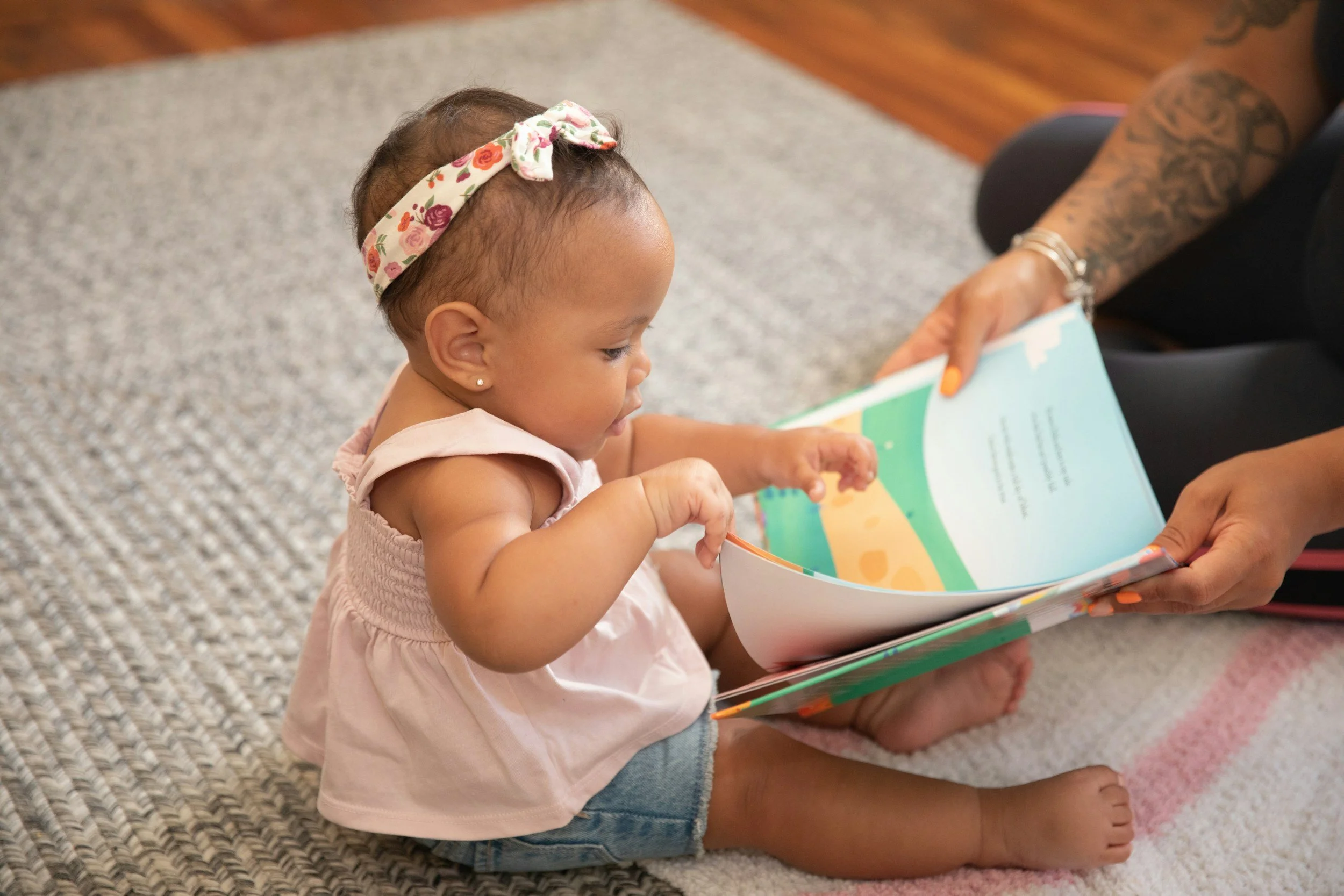
How a Few Minutes a Day Can Help Your Child Thrive in Preschool
In this post: A step-by-step guide to bringing circle time into your home, why starting at birth matters more than you might think, how to grow the experience as your child grows, simple activity ideas to extend the learning, free and low-cost resources, local Seattle-area shop recommendations, and a curated song playlist you can start using today.
Download the free circle time playlist here:
Ms. Ashley’s Circle Time Playlist
Ready to give your child a joyful head start? Keep reading, and grab your free resources along the way.
What is Circle Time
If you have a baby or toddler headed toward the preschool years, you may have heard the phrase "circle time" and wondered what it actually means, or whether you need to be doing something about it at home. The short answer is: yes, and it is so much simpler than you might think.
Circle time is the part of a preschool day where children gather together as a group for songs, stories, learning, and conversation. It is where little ones begin to build some of the most important skills they will carry with them through school and beyond. And here is the beautiful thing: you can bring it right into your living room in a fun and joyful way that lays the foundation for individual learning and learning in a group setting.
What Circle Time Actually Teaches
When we talk about circle time, most parents think of the academic pieces: learning the alphabet, counting to ten, recognizing colors and shapes. And yes, those things are absolutely part of it, but circle time is doing so much more beneath the surface.
Through circle time, children begin to learn how to participate in a group. They practice waiting for their turn. They build the ability to focus on something for a short stretch of time. They develop spatial awareness, coming to understand where their body is in relation to others. They begin to recognize themselves and the people around them. They even start to learn about bodily autonomy, understanding that their space is their own.
These are the skills that help a child walk into their first day of preschool and feel, somewhere deep down, like they know how this works.
Does Your Child Need to Master Any of It? Absolutely Not.
Exposure is the goal here, not mastery. A child who has heard the alphabet song a hundred times at home is not expected to recite the alphabet perfectly on their first day of school. But that familiarity is everything. When a teacher starts singing a song your child has heard before, something clicks. The environment feels a little less new. A little less scary. And that is a gift.
The same goes for letters, numbers, days of the week, colors, and books. The goal is not to fill your child’s brain with knowledge and song lyrics to recite. Instead, you are wrapping them in the sounds and rhythms of learning so that when they encounter it in a classroom, it feels like home.
How to Do Circle Time at Home
You do not need much. Here is a simple structure you can follow:
Start with a hello song. "Hello, [child's name], how are you?" sung to any tune you like. This signals that something special is starting and gives your child a moment to feel seen.
Move into a short learning moment. Count to five together. Name the colors on a felt board. Pull out a felt letter and say its name and sound. Keep it light, keep it playful.
Read one short book or tell a simple felt board story. Two to five minutes is plenty for very young children. Choose books they love that will keep their attention or introduce a new book that is only used during this time.
Close with a familiar song. "Wheels on the Bus," "Twinkle Twinkle Little Star," "Old MacDonald," whatever your child loves. Repetition is magic for little ones.
That is it. Three to five minutes, done with joy, is worth more than 20 minutes of something that feels forced.
Individuation, Identity, and Interoception
One of the most meaningful things circle time can teach is that your child is their own person with their own name. A simple hello song can do this beautifully. Try singing: "Hello, [child's name], how are you? Can you tell me who's sitting next to you?" If it is just the two of you, the person sitting next to them is you! Respond with genuine excitement and say “It’s MAMA (or caregiver’s name)”. Sing it for yourself too, point to them, and say their name “It’s Layla!”. Over time, this builds name recognition, helps your child understand that they are a separate person from you, and plants the earliest seeds of social awareness.
The hello song is doing more than just starting your circle time. It is one of the simplest and most meaningful opportunities you have to introduce your child to something that researchers call social emotional learning, or SEL. SEL is the process through which children begin to develop healthy emotional habits, including the ability to identify their own feelings, understand the feelings of others, and build the kind of self-awareness that supports everything from relationships to academic success. Studies involving more than one million students across PreK through 12th grade show that SEL has a consistent positive impact on academic achievement, mental wellness, and healthy social behavior. CASEL (CASEL, Collaborative for Academic, Social, and Emotional Learning)
And it starts earlier than most people think.
Right after you sing your hello song and name each person in the circle, pause for a moment and share how you are feeling. "Today I am feeling happy." "Mama is feeling a little tired this morning." "Is Micah feeling silly today, or maybe a little sleepy?" You do not need your child to respond. You are simply offering them language. Children learn to recognize and understand their emotions in stages: first noticing that something feels different in their body, then learning to name that sensation, and eventually linking that sensation to an emotional state. GriffinOT (Goodall, E., Ready to Learn Toolkit) . When you name your own feelings out loud every single day during circle time, you are giving your child a living, breathing vocabulary for their inner world, long before they have the words to use themselves.
This practice is also connected to something called interoception, the ability to notice and interpret the signals your body sends from the inside. A racing heart, a heavy feeling, a belly full of butterflies. When children are aware of these internal cues, they are better able to label their emotions and choose how to respond, which forms the foundation of emotional intelligence. Everyday Parenting (Everyday Parenting, Building Emotional Awareness in Children Through Interoception and Neuroception, 2024). Stopping to check in during circle time, even in the most gentle and playful way, is an early form of this practice. You are teaching your child that their feelings are worth noticing, that their body has something to say, and that the people around them care enough to ask.
Circle Time From Birth: Growing With Your Child
One of the most remarkable things about babies and young children is the speed at which their brains develop. The period from birth through the early preschool years represents the fastest rate of brain growth in the entire human lifespan. Billions of neural connections are forming in response to every experience, every song, every word, and every routine. This means that even the smallest, most gentle introduction to structure and learning carries real weight during these early years.
You can begin circle time from the very beginning.
For newborns and young babies, circle time does not look like sitting in a circle. It is simply the act of repeating the same gentle songs and reading one short book each day. Singing "Twinkle Twinkle Little Star" or "Good Morning My Love" by VERED at the same time each day begins to create something incredibly powerful: a routine. Many families naturally fold this into their bedtime ritual, using familiar songs and a book to signal to baby that sleep is coming. This is the very beginning of time awareness. When a baby begins to associate a familiar song with what comes next, they are learning about transitions, sequencing, and predictability. These are the same cognitive building blocks that will later help them understand that circle time comes before snack, and that clean-up means something new is about to begin.
Routine is not about rigidity. It is about giving your child a sense of safety and trust in their world.
As baby grows into a mobile, curious older infant and young toddler, you can begin to lengthen the experience and layer in a little more. Try adding in or swapping for songs that involve hand motions, like "Itsy Bitsy Spider" or "Open Shut Them." These songs do double duty: they build fine motor skills and body awareness while also making the experience more interactive and fun. Choose books with slightly more pictures and a few more words. Your child is ready for a little more, and they will show you that by leaning in.
As your toddler grows, movement becomes a wonderful addition. Songs like "Head Shoulders Knees and Toes" or "Run Baby Run" by Caspar Babypants invite the whole body into the learning experience. This is also the time to begin introducing concepts like letters, numbers, colors, and the days of the week in a light, playful way. Simply naming things, pointing to them, and celebrating recognition is enough. Do not expect your child to begin reciting things back to you, instead trust the process, and that your child is absorbing so much more than it may seem!
This is also a wonderful time to introduce a felt board with letters and numbers. Bringing in one or two felt pieces at a time and letting your child stick them to the board is deeply satisfying for little hands. The tactile experience of pressing a felt letter onto a board and watching it stay is genuinely exciting for toddlers, and it is also excellent fine motor skill development. No worksheets required.
The Many Benefits of Music
Music is one of the most powerful tools we have for regulating our emotions, and it's something we can offer our children from the very beginning. You've probably noticed how a certain song can shift the entire mood of a room. Music reaches us in a way that words alone often can't, and the science backs this up in a really beautiful way.
Researchers have found that music and language actually share overlapping pathways in the brain. One system, based in the temporal lobes, helps us memorize information in both language and music, like words and meanings on one hand, and familiar melodies on the other. A second system, rooted in the frontal lobes, helps us unconsciously learn and apply rules: the rules of grammar in language, and the rules of harmony in music. (Miranda & Ullman, Georgetown University Medical Center, 2007) What this means for young children is significant: when they're singing songs and hearing music regularly, they aren't just having fun. They're building the very brain systems that support language development. Research suggests that music places higher demands on these shared brain networks than everyday speech does, which may actually strengthen them over time. (Patel, A.D., OPERA Hypothesis, Frontiers in Psychology, 2011)
Weaving music intentionally into circle time is one of the simplest ways to create a moment that feels grounding for both you and your child. Circle time, at its heart, is about connection and rhythm, and music supports both. Choosing activities that help regulate your child's nervous system and your own can turn this small daily ritual into something you both genuinely look forward to. That's why I'm a big believer in being intentional about the music you choose.
Here's my honest take: a lot of children's music is loud, repetitive, and frankly a little grating. If you're dreading pressing play, you're not going to want to show up for this every day, and that's okay to admit. The good news is there are so many children's artists making music that actually sounds beautiful. Artists like Raffi, Charlie Hope, and Christina Perri, whose album Songs for Pixie is a personal favorite, have songs that feel warm and calm and genuinely enjoyable for the adults in the room too.
That said, not every circle time needs to be calm and quiet. Sometimes it's jumping, spinning, shaking sillies out, and celebrating each other at full volume, and that's just as regulating. Moving your body and expending energy is its own kind of reset. So follow your child's lead, and let the playlist match the mood.
Here is Ms. Ashley’s Circle Time Playlist to help get you started! Download the playlist and then add or remove any songs you like!
Once you've found music your family loves, adding simple instruments is a beautiful next step.
Bringing Instruments Into Circle Time
One of the simplest and most joyful additions you can make to your circle time is music, and not just singing. Giving your child something to shake, tap, ring, or bang along with a song adds a whole new dimension to the experience and the learning. Even before your child is old enough to hold the instrument themselves, you playing it for them gives them a beautiful sensory experience different from just hearing you sing.
Young children are naturally drawn to making noise, and that instinct is worth celebrating. When a child shakes a rattle in time with a song, they are practicing art, developing rhythm and timing, building fine and gross motor skills, learning cause and effect, and practicing listening and attention all at once. Music is also deeply tied to emotional regulation. A child who has a shaker egg in their hand during circle time has something to do with their energy, which often means they stay engaged longer and feel more at ease.
Simple instruments to try:
Shaker eggs and small rattles are perfect starter instruments for babies and toddlers. They are easy to grip, safe, and satisfying to use. A set of shaker eggs is inexpensive and comes in multiple colors, which means you can also sneak in a color identification moment while you play.
Bells, whether wrist bells, sock bells, jingle bells on a handle, or a small bell bar, add a bright, cheerful sound that children absolutely love. They also require a slightly different motion than shaking, which is great for developing varied hand and wrist movement.
A small xylophone is a wonderful introduction to melody and cause and effect. You tap it and something happens. Each key makes a different sound. For older toddlers, you can begin to connect the colors on the keys to the colors you are learning in circle time, and even play simple tunes together.
And do not underestimate what is already in your kitchen. A wooden spoon and an upside down pot is a drum. A container of dried rice or beans with a lid taped down is a shaker. A set of metal measuring spoons clinked together is a bell. These household instruments are often just as exciting to a toddler as anything you could buy, and there is something genuinely wonderful about watching a child discover that music can be made from anything.
A simple way to bring this into your existing circle time routine is to introduce one instrument per song. Shake the eggs during a fast, upbeat song. Ring the bells softly during something gentle. Bang the drum during "Run Baby Run." Let your child lead when they are ready, and follow their cues on volume and energy. Some days it will be loud and chaotic and full of laughter. That is a great circle time.
Extending the Learning: Simple Activities That Connect

Another fun educational tool you can use at home is extending learning beyond one activity. This can be done by tying to things together with a common theme. This does not need to be elaborate or Pinterest-worthy. Even one small follow-up activity helps your child build a bridge between what they heard, what they sang, and what they see on the page, and that bridge is where real learning takes hold. This can be something as simple as reading a book about birds and them observing birds in your backyard.
Here are a few easy pairings to get you started:
After reading a book about ocean animals, like The Pout-Pout Fish, pull out the Under the Sea Coloring Pages and let your child color or paint a crab, a fish, or an octopus. Each page includes the written name of the animal, which builds letter recognition and vocabulary at the same time. Use it as a jumping off point for a simple life science conversation: where does this animal live? What does it eat? This type of conversation is enormously valuable for a young brain. It encourages critical thinking and recall.
After counting together in circle time, sit down with one page from the Spot the Number Collection for a gentle, connected follow-up. This is a together activity, not an independent one. Sit side by side, talk about everything on the page, identify the written number, name the colors, and explore the vocabulary together. One sheet at a time is plenty. The goal is the conversation and the connection, not completion.
After singing Itsy Bitsy Spider, your child has just heard the word spider many times in a song they love. Provide a coloring page with a spider on it gives them a chance to see a visual of that word and make a real cognitive connection. You can find a spider page inside the Halloween and Fall Coloring Pages collection. While you color together, talk about what a spider looks like, count its legs, and ask your child where they think spiders live.
When your child is ready to take their fine motor practice a step further, the Animal Tracing Worksheet is a beautiful bridge between coloring and early writing. Designed for ages 2 to 5, it builds hand control and left-to-right movement, which are the foundational pre-writing skills children will use when they begin forming letters. A fun tip: slip it into a dry-erase sleeve and your child can use it over and over again.
None of these activities need to last more than a few minutes. The point is simply to give your child one more touchpoint with something familiar, another small moment to make a connection and feel capable. That feeling of "I know this" is one of the greatest gifts you can offer a young learner.
Make It Your Own
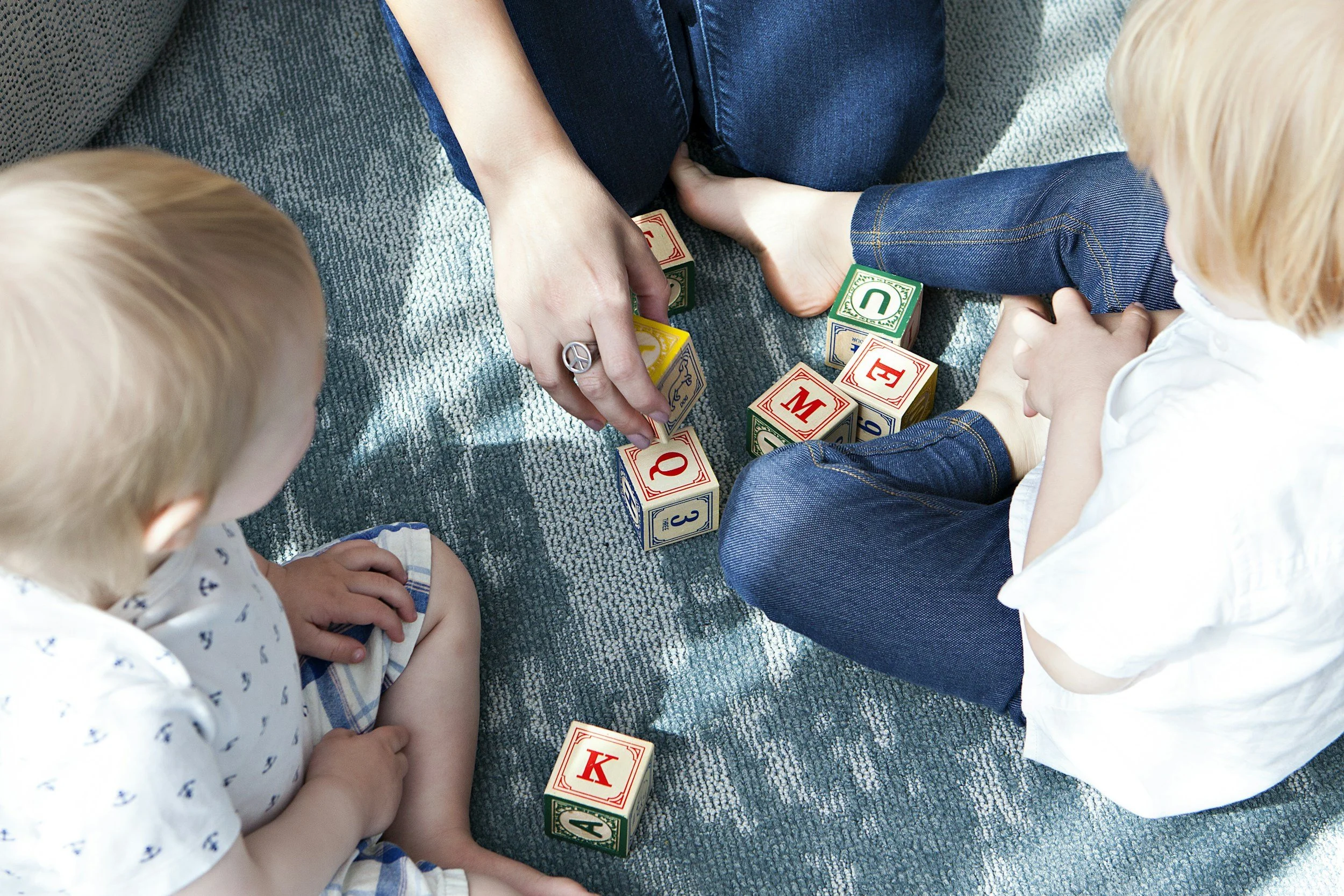
Here is something I want every parent and caregiver to hear: you know your child better than anyone. You know what makes them light up, what overwhelms them, what time of day they are most receptive, and what songs make them wiggle with excitement. Use that knowledge.
Circle time does not have a single right way to look. It can happen on the living room floor or in the backyard. It can include your family's language, your cultural songs, your favorite books. It can be two minutes or ten. It can involve a felt board and alphabet posters, or just your voice and a well-loved book. What matters is that you are showing up, engaging intentionally, and giving your child a consistent, joyful experience of learning.
There is no perfect version of this. There is only your version. And the simple act of offering your child this kind of intentional, loving attention adds real value to their life and their learning, every single time. Trust yourself. You are already doing something beautiful.
Sometimes Circle Time Is a Flop, and That Is Perfectly Fine
Remember to give yourself and your child lots of grace. Even in the most beautifully run preschool classrooms, children sometimes simply are not interested. They wander off. They lie down on the rug. They are deeply focused on something else entirely. This happens with the most experienced teachers in the most engaging environments, and it is completely normal.
At home, your circle time may last 90 seconds before your toddler decides the dog is more interesting. That is okay. You showed up, you provided a moment for connection and learning, and that matters, too. Following your child's cues is always the right call. The goal is to offer the experience consistently, not to force participation.
Every time you sit down with a book, sing a little song, or point to the letter on the wall, you are building a foundation. Low stakes, lots of love, and showing up again tomorrow.
Where to Find Circle Time Supplies
Feeling prepared can be a helpful push you might need to indtroduce this new routine. You can use what you have at home already or you can purchase some items to help! Please note that you do not NEED any special materials or equipment to make this experience valueable for your child.
For those interested in getting some materials to help, you can absolutely put together your own simple circle time collection, and I have made it easy to find what you need whether you prefer shopping local or ordering online.
Shop Local (Seattle Area):
Curious Kidstuff in West Seattle (4740 California Ave SW) is a long-loved neighborhood gem with a wide selection of educational toys, books, and art supplies. Perfect for browsing felt materials, books, and crayons.
Lakeshore Learning in Bellevue (3924 Factoria Square Mall SE) is the area's best-kept teacher supply secret. They carry felt and flannel boards, alphabet materials, classroom posters, and much more at excellent quality. Worth the trip.
Affordable Books:
Half Price Books has a location right in Tukwila (16828 Southcenter Pkwy) and you can also shop their full inventory online at hpb.com. A wonderful source for gently used board books, picture books, and early reader titles at a fraction of the cover price.
ThriftBooks is an online used bookseller headquartered right here near Seattle, and it is one of my favorites for building an affordable home library. They carry a huge selection of children's books, grade each book's condition clearly before you buy, and offer free shipping on orders over $15. Shop their children's section at thriftbooks.com.
Also Available on Amazon:
This section contains affiliate links. If you purchase through them, I may earn a small commission at no extra cost to you. I only recommend things I genuinely love and would share with any family I work with.
Felt Board with Letters and Numbers
Melissa and Doug Caterpillar Xylophone
Handheld Jingle Sleigh Bells
Circle Time Songs Playlist
All songs linked throughout this post are available on Spotify. I recommend saving them to a playlist so everything is in one place and ready to go when circle time begins, or download my playlist for free here: Ms. Ashley’s Circle Time Playlist
Sources:
Miranda, R. & Ullman, M. (2007). Music and language are processed by the same brain systems. Georgetown University Medical Center. Via ScienceDaily.
Patel, A.D. (2011). Why would musical training benefit the neural encoding of speech? The OPERA hypothesis. Frontiers in Psychology, 2, 142.
CASEL. (2025). What does the research say? Collaborative for Academic, Social, and Emotional Learning. casel.org
Goodall, E. Ready to Learn Toolkit. Via GriffinOT: Helping children with interoceptive awareness. griffinot.com
Everyday Parenting. (2024). Building emotional awareness in children through interoception and neuroception. edparenting.com